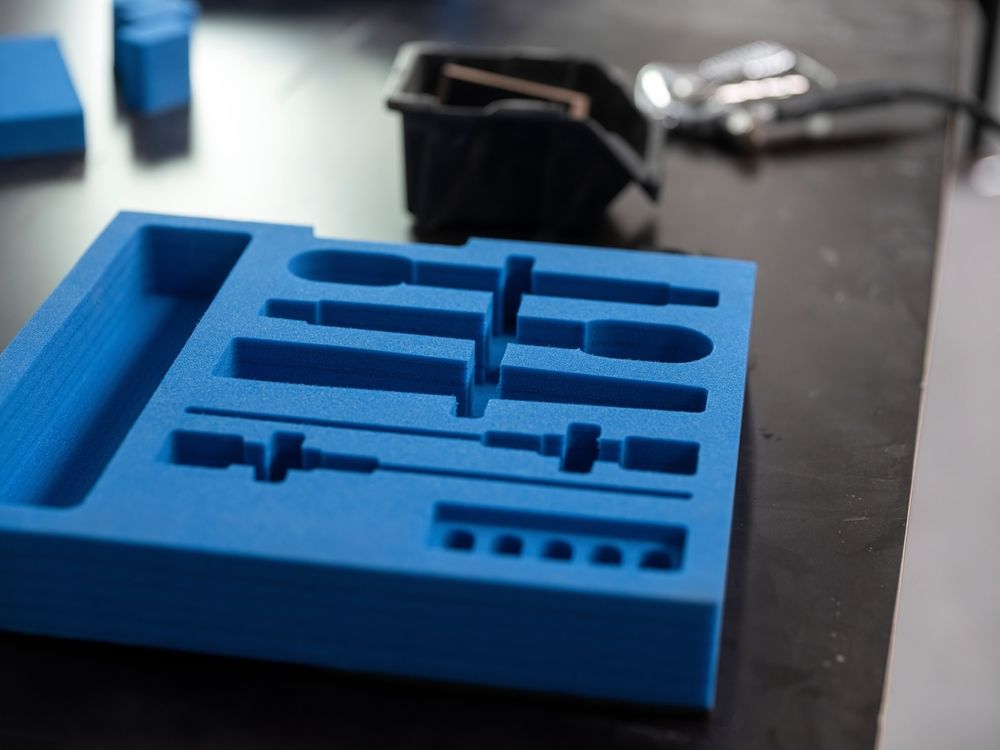
Foam Machined to Exact Dimensions
CNC Foam Cutting in Nampa for prototyping, mold making, packaging inserts, and custom fabrication projects
High-density foam used in prototyping, mold creation, and specialty applications requires precise shaping that manual cutting methods cannot achieve without creating irregular surfaces or dimensional inconsistencies. CNC foam cutting produces consistent shapes and detailed designs by removing material along computer-controlled toolpaths that maintain exact depth and contour throughout the workpiece. Treasure Valley CNC machines foam in Nampa for product development, packaging design, display fabrication, and custom applications where foam's light weight and machinability provide advantages over heavier materials.
The cutting process uses specialized tooling that removes foam without tearing or compressing the cellular structure, which would create rough surfaces unsuitable for molding or prototype applications. High-speed spindles and controlled feed rates prevent heat buildup that would melt foam rather than cut it cleanly. The CNC equipment produces three-dimensional contours, undercuts, and surface details that define mold cavities, create form-fitting packaging inserts, or establish prototype geometry for parts that will eventually be manufactured in production materials.
Contact the team for a free estimate on your foam cutting project with material specifications and design details.
What Proper Foam Machining Requires
Foam machining demands tooling and cutting parameters calibrated for the material's low density and cellular structure, which behaves differently under cutting forces than metals or solid plastics. Tool selection emphasizes sharp edges that slice foam cells rather than crushing them, and spindle speeds are adjusted to prevent friction heat that would melt rather than cut the material. Vacuum workholding secures foam during machining without compression that would distort dimensions or leave surface impressions.
After machining, you receive foam components with smooth surfaces suitable for coating or molding applications, accurate dimensions that match CAD specifications for fit-critical applications, and clean edges without the torn or compressed texture that hand cutting produces. Packaging inserts cradle products precisely because cavity dimensions account for item geometry and protection requirements, mold patterns replicate design details that will transfer to cast or laminated parts, and prototype components display intended shapes for visualization and testing before committing to production materials.
Applications including product displays, custom packaging, architectural models, and specialty fabrication benefit from foam's combination of machinability, light weight, and sufficient rigidity for temporary or low-load uses. Local manufacturing and personalized customer support in Nampa allow direct communication about design requirements and material selection throughout the project.
What Customers Usually Ask
The questions below address foam density selection, machining capabilities, and typical applications for CNC foam cutting services.
What foam densities can be machined?
High-density polyurethane and polystyrene foams machine most successfully because their cellular structure resists compression and tearing during cutting, while lower-density foams tend to crush or deflect under tool pressure and produce less accurate results.
How does foam cutting support mold making?
Machined foam patterns serve as master models for composite layup, vacuum forming, or casting processes where the foam shape defines the final part geometry, with surface finish and dimensional accuracy directly affecting the quality of molded components.
What size limitations apply to foam machining?
CNC equipment accommodates foam blocks several feet in each dimension depending on machine capacity, with larger projects either machined in sections for assembly or produced on specialized large-format equipment.
Can foam components be coated or finished after machining?
Machined foam surfaces accept coatings, paints, and textured finishes that seal the cellular structure and provide desired appearance or durability, though coating compatibility depends on foam chemistry and solvent content in finishing products.
How does foam cutting compare to 3D printing for prototypes?
Foam machining removes material from solid blocks to create larger components faster than additive printing builds them layer by layer, making CNC cutting more efficient for substantial prototype volumes or when material properties must match production substrates rather than printing resins.
Treasure Valley CNC delivers efficient foam cutting with dependable quality and quick turnaround for prototyping and specialty fabrication needs. Call (208) 272-0554 to describe your foam cutting requirements and project scope.