Joints That Hold Under Real Stress
Welding Services in Nampa for fabricated assemblies, structural repairs, and custom manufactured components
Treasure Valley CNC provides TIG welding, MIG welding, and plastic welding in Nampa for projects requiring structural integrity and clean finishes. The work addresses precision joining requirements for custom fabrication, equipment repairs, and manufactured assemblies where weld quality directly affects long-term performance. You receive experienced workmanship that integrates with CNC machining and laser cutting when projects require complete fabrication from raw material to finished assembly.
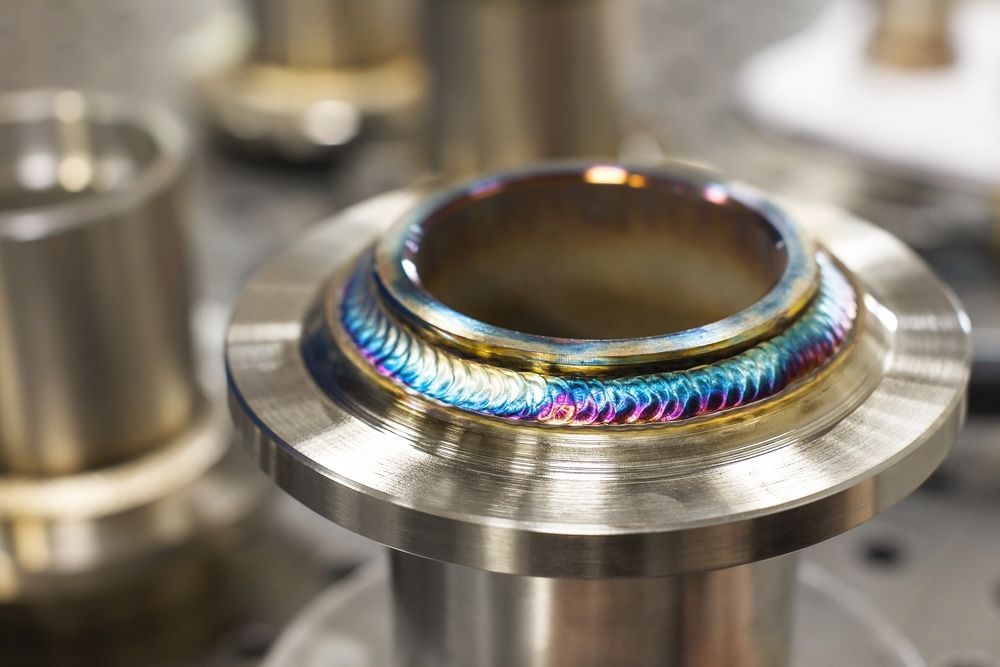
The welding process selection depends on material thickness, base metal composition, and whether the finished weld requires grinding or remains visible. TIG welding produces precise, low-spatter joints suitable for thin materials and visible welds on stainless steel or aluminum, while MIG welding handles thicker steel assemblies where penetration and speed matter more than cosmetic appearance. Plastic welding uses heated rod and controlled temperature to join thermoplastic components without introducing mechanical fasteners that create stress points.
Request a welding estimate that accounts for your material specifications and joint configuration.
What Proper Welding Requires
Structural welding begins with material preparation that removes mill scale, oil residue, and oxidation that would contaminate the weld pool and weaken the joint. The base metal receives edge preparation through grinding or machining to establish correct joint geometry, and components are fixtured to prevent warping during heat application. Welding parameters including amperage, travel speed, and shielding gas flow are adjusted based on material type and thickness to control heat input and penetration depth.
After welding, you notice joints with full penetration, consistent bead appearance, and no visible porosity or undercut. The welded assembly maintains dimensional accuracy because controlled heat input and proper fixturing prevented distortion during cooling. Components that were fractured, cracked, or separated now function as continuous structures capable of carrying load without separation at the weld interface.
Projects requiring both welded structures and precision machined features are completed in a single facility without transferring work between shops. This integration reduces lead time and maintains tighter tolerances because reference surfaces remain consistent throughout fabrication, and welded assemblies can be fixtured directly into CNC equipment for final machining operations.
What Fabricators Usually Ask
The questions below address welding process selection, material compatibility, and integration with other fabrication services available locally in Nampa.
What determines whether a project needs TIG or MIG welding?
TIG welding is selected for thin-gauge materials, aluminum or stainless steel assemblies, and applications where the weld remains visible, while MIG welding handles thicker steel components and structural assemblies where speed and penetration take priority over cosmetic finish.
How does plastic welding differ from thermal bonding?
Plastic welding uses a heated filler rod of the same polymer composition as the base material to create a molecular bond that maintains the material's original properties, whereas adhesive bonding introduces a different material at the joint that may have incompatible thermal expansion or chemical resistance.
What preparation does the base material require before welding?
Base metals are cleaned to remove contaminants, edges are prepared through grinding or machining to establish proper joint geometry, and components are fixtured to maintain alignment and prevent distortion during the heating and cooling cycle.
Can welded assemblies be machined after joining?
Welded structures are fixtured into CNC equipment for post-weld machining operations that add precision holes, flat reference surfaces, or tight-tolerance features that couldn't be completed before welding due to distortion concerns.
How does local production in Nampa affect project turnaround?
Work completed in a single facility without outsourcing allows tighter coordination between welding and machining operations, reduces transportation delays, and provides direct communication for any design adjustments discovered during fabrication.
Treasure Valley CNC schedules welding projects based on material availability and current production load, with quick turnaround available for repair work and smaller assemblies. Contact the shop at (208) 272-0554 to discuss your welding requirements and receive a project estimate.