Wood Shaped With Repeatable Precision
CNC Wood Cutting in Nampa for cabinetry, furniture components, decorative features, and custom woodworking projects
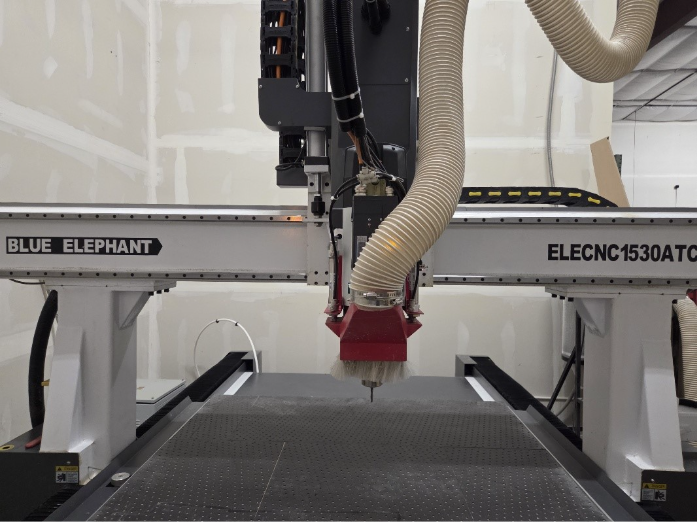
Advanced CNC equipment machines hardwood, softwood, and MDF materials with precision cutting, carving, and engraving capabilities that manual woodworking cannot replicate consistently across multiple pieces. Treasure Valley CNC operates in Nampa to produce custom wood components for cabinetry, furniture, signs, and specialty projects where dimensional accuracy and design complexity exceed what table saws and routers can achieve. You benefit from computer-controlled toolpaths that execute identical cuts across entire production runs, eliminating the variation inherent in hand-guided operations.
The wood cutting process converts CAD designs into machine instructions that control cutting depth, feed rate, and tool selection throughout each operation. Router bits and specialized cutting tools remove material according to programmed toolpaths, creating profiles, pockets, and surface details that match the digital model. Whether the project requires through-cuts that separate components, relief carving that adds dimensional texture, or engraving that produces fine detail, the CNC equipment maintains consistent depth and edge quality.
Request a quote for your wood cutting project with specific material and design requirements included.
What You Notice Once Machining Is Finished
CNC wood cutting produces components with edges that require minimal sanding, profiles that repeat exactly across multiple pieces, and details that remain crisp because cutting tools follow programmed paths without deviation. Joints fit tightly because mating surfaces are machined to consistent dimensions rather than adjusted individually, and decorative features align properly when assembled because each component matches the digital reference.
Finished pieces arrive with smooth machined surfaces on hardwoods like oak and maple, clean edges on softwoods used for structural components, and precise detail on MDF used for painted or laminated applications. Cabinetry components assemble without gaps or misalignment, furniture parts maintain symmetry across pairs and sets, and decorative features display the intended design without tool marks or inconsistent depth. The work eliminates the trial-and-error fitting common in manual woodworking because dimensions are controlled digitally throughout machining.
Quick turnaround and local production in Nampa support both one-off custom pieces and production runs where multiple identical components are required. The service includes design consultation when CAD files need optimization for CNC machining or when hand sketches need conversion into manufacturable digital formats.
Answers to Woodworking Questions
These questions address material selection, design complexity, and the advantages CNC machining provides over traditional woodworking methods.
What wood materials work best for CNC cutting?
Hardwoods like oak, maple, and walnut machine cleanly with minimal tear-out, softwoods like pine and cedar cut efficiently for structural applications, and MDF provides consistent density for painted finishes and complex profiles without grain direction concerns.
How does CNC cutting handle intricate designs?
Computer-controlled toolpaths execute complex curves, tight inside corners, and detailed surface carving that would be impractical or impossible with hand-guided routers, maintaining consistent accuracy throughout patterns that repeat across multiple workpieces.
What thickness limitations apply to wood cutting?
CNC routers typically handle material thickness from thin veneers up to several inches depending on the specific cut depth required, with through-cutting capability determined by the longest available cutting tool and the material's tendency to deflect under cutting forces.
Can CNC machining create joinery features?
Mortises, tenons, dovetails, and other joinery details are machined directly into components with precise dimensions that ensure tight fits without manual adjustment, though traditional joinery techniques may still be preferred for certain structural applications.
How does the climate in Nampa affect wood machining?
Idaho's relatively dry climate reduces seasonal wood movement compared to humid regions, but dimensional stability still requires proper material acclimation before machining and finish application after cutting to prevent warping or cracking in completed projects.
Treasure Valley CNC produces custom wood components with accurate machining and quick project turnaround for local woodworking and fabrication needs. Call (208) 272-0554 to discuss your wood cutting project and receive a free estimate.