Custom Parts Machined from Multiple Materials
CNC Router Cutting in Nampa for Custom Components Requiring Repeatable Precision
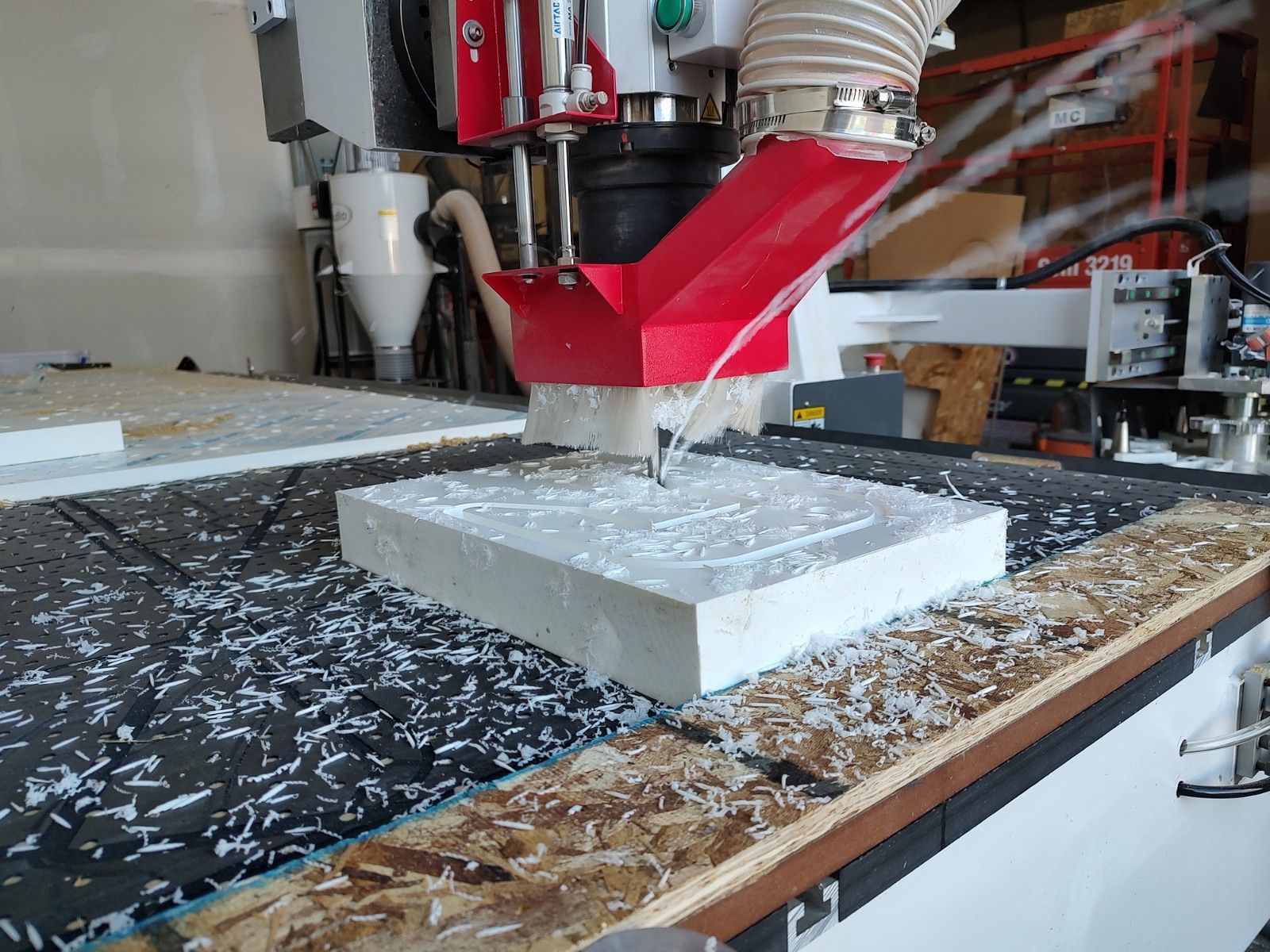
Treasure Valley CNC machines wood, foam, plastics, and composite materials on a 5-foot by 10-foot cutting table equipped with advanced 4-axis capability. The additional axis allows the machine head to rotate around the part, enabling detailed carvings and angled cuts that standard three-axis routers cannot achieve. This capacity supports custom manufacturing for signs, cabinetry, fixtures, displays, and specialty fabrication across Nampa and surrounding communities.
The router produces consistent cuts and complex geometries by following programmed tool paths that repeat precisely across multiple parts. You avoid the variation that comes with hand tools or manual cutting, particularly when fabricating components that must fit together or match existing dimensions exactly.
Request a detailed estimate based on material type, part dimensions, and production quantity to review cost and turnaround time.
How Router Cutting Produces Complex Shapes
The CNC router uses rotating cutting bits guided by digital files to remove material along programmed paths. Depth control, feed rate, and spindle speed are adjusted based on material hardness and density, ensuring clean edges without burning, chipping, or delamination. The 4th axis allows the machine head to rotate around the part.
You receive parts with smooth edges and consistent dimensions across the entire production run. Complex profiles, pockets, and through-holes appear exactly as designed, and repeated orders produce identical components without recalibration. Fixtures align properly, panels fit without gaps, and assembly proceeds without manual adjustment.
Treasure Valley CNC completes production locally, which shortens lead times and allows for direct communication during design revisions. Material waste is minimized through efficient nesting of parts on the cutting table, and tooling selections are optimized for each material to extend bit life and reduce production costs.
What Customers Ask About Router Cutting
Projects involving custom components, prototype development, or small production runs often raise questions about capabilities, material compatibility, and turnaround expectations.
What materials can the router machine?
The 5-foot by 10-foot table handles wood, foam, plastics, and composite materials, with tooling and feed rates adjusted based on material density and hardness to prevent burning or delamination.
How does the 4-axis machine differ from standard routers?
The additional rotational axis allows the cutting bit to approach surfaces from variable angles, enabling detailed carvings, angled cuts, and contoured shapes that three-axis machines cannot produce without manual repositioning.
What file formats are required for production?
Digital files in common CNC formats such as DXF, DWG, or vector-based formats are converted into tool paths that control cutting depth, speed, and routing sequence.
How does turnaround time vary with project complexity?
Simple cuts with straight edges and minimal tool changes complete faster than intricate carvings or multi-depth profiles, with production time billed based on actual machining duration.
What tolerances can the router maintain across multiple parts?
Programmed tool paths repeat consistently, producing dimensions that remain within tight tolerances across production runs, which supports assembly and interchangeable component requirements common in fabrication projects throughout Nampa and the Treasure Valley. Our industrial grade CNC router has a tolerance of +- .002
Treasure Valley CNC provides free estimates for custom router cutting projects, with pricing based on material selection, part complexity, and production volume. Contact the shop at (208) 272-0554 to discuss your fabrication requirements and review project specifications.